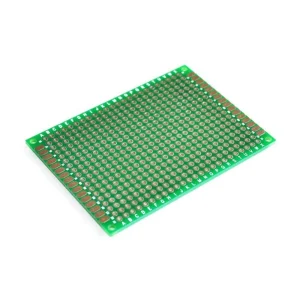
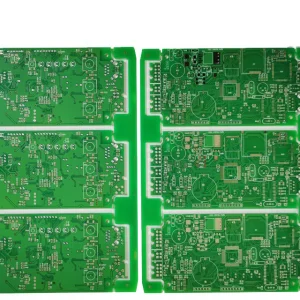
In high-speed, high-density, and radio-frequency (RF) applications, traditional FR-4 glass-epoxy laminates fail to deliver the signal integrity required by modern computational architectures. Rogers Corporation’s specialized laminates (such as the Rogers 4350B, 4003C, and RT/duroid series) represent the pinnacle of dielectric engineering. Unlike standard substrates, Rogers high-frequency circuit materials feature exceptionally stable dielectric constants (Dk) and ultra-low dissipation factors (Df) across a wide range of frequencies, temperatures, and moisture levels.
For systems operating in the gigahertz spectrum—such as 5G base stations, satellite communications, advanced driver assistance systems (ADAS), and aerospace radar—attenuation and phase distortion must be minimized. Rogers PCBs provide the critical electrical stability, thermal ruggedness, and mechanical matching to prevent impedance mismatches. By maintaining tightly controlled impedance tolerances (+/- 5% or tighter) and featuring smooth, low-profile copper foils, these boards limit conductor loss and signal degradation, ensuring that high-frequency data streams remain coherent and uncorrupted.
Seattle, Washington, is a global epicenter for technological advancement. From the aerospace legacy of Boeing and the burgeoning commercial space corridor in the Kent Valley to the cloud computing giants headquartered in Redmond and Seattle, the Pacific Northwest demands hardware that operates at the bleeding edge. Furthermore, Seattle’s maritime engineering, marine telemetry, and defense-contractor clusters rely on robust electronics that can survive hostile salt-spray environments and extreme temperature cycling without signal degradation.
In this high-stakes environment, design engineers cannot afford failures. Aerospace telemetry equipment, satellite-based communication systems, and deep-sea sensor networks require Rogers PCBs because they exhibit low outgassing characteristics under vacuum conditions (essential for space flight) and superb mechanical stability when bonded with FR-4 in hybrid multi-layer configurations. Seattle’s rapid prototyping culture demands that local aerospace and maritime innovators have immediate access to world-class Rogers PCB fabrication partners who understand local compliance frameworks (including ITAR regulations and AS9100 aviation standards) while providing the scalable capacity required for commercial deployment.
"For Seattle's commercial space sector, Rogers RT/duroid series PCBs are non-negotiable. The combination of low thermal expansion, dimensional stability in vacuum, and ultra-high frequency performance is critical for sub-orbital and low-earth orbit communications."
Understanding when to specify Rogers over FR-4 is critical for managing project budgets while ensuring mission-critical reliability. The table below details the thermodynamic and electromagnetic characteristics that distinguish Rogers materials:
| Parameter | Standard FR-4 (High Tg) | Rogers RO4350B | Rogers RO4003C | Rogers RT/duroid 5880 |
|---|---|---|---|---|
| Dielectric Constant (Dk @ 10GHz) | 4.2 - 4.6 | 3.48 ± 0.05 | 3.38 ± 0.05 | 2.20 ± 0.02 |
| Dissipation Factor (Df @ 10GHz) | 0.015 - 0.020 | 0.0037 | 0.0027 | 0.0009 |
| Thermal Expansion (CTE z-axis, ppm/°C) | 50 - 60 | 32 | 46 | 31 |
| Moisture Absorption (%) | 0.15% - 0.25% | 0.06% | 0.06% | 0.02% |
| Outgassing (TML / CVCM %) | Not rated for space | 0.12 / 0.02 (Low) | 0.12 / 0.01 (Low) | 0.03 / 0.01 (Vacuum grade) |
While Seattle remains the hotbed of technology design and initial validation, scaling these complex RF systems requires a global outlook on procurement. The major challenge in manufacturing high-frequency PCBs locally is the high material cost of Rogers laminates and the specialized equipment needed for precise processing, such as plasma de-smearing and automated optical alignment for multi-layer registration.
This is where China’s Industry 4.0 smart manufacturing plants come into play. Modern Chinese fabrication facilities feature fully automated, API-driven production lines that minimize human error and ensure repeatable impedance controls. By integrating Laser Direct Imaging (LDI) with advanced chemical vertical etching lines, these factories maintain sub-mil trace and space tolerances at scale. Furthermore, robust logistics networks and long-term contracts with material suppliers like Rogers ensure a stable, uninterrupted supply of high-grade laminates, shielding global OEMs from localized supply-chain shocks.
By leveraging Chinese manufacturing expertise for mid-to-high volume production runs, Seattle hardware startups and enterprise OEMs alike can achieve up to a 40% reduction in manufacturing costs while maintaining identical quality standards. The hybrid procurement strategy—prototyping locally in Washington for rapid validation and transitioning to scale production in advanced partner facilities—has become the gold standard for hardware growth directors globally.
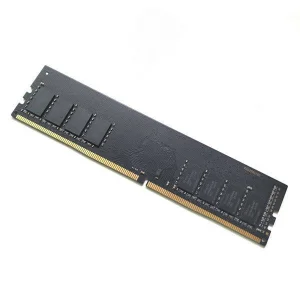
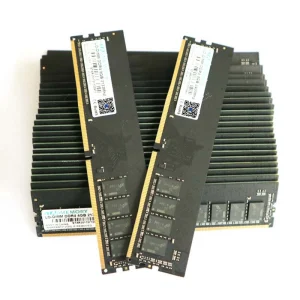
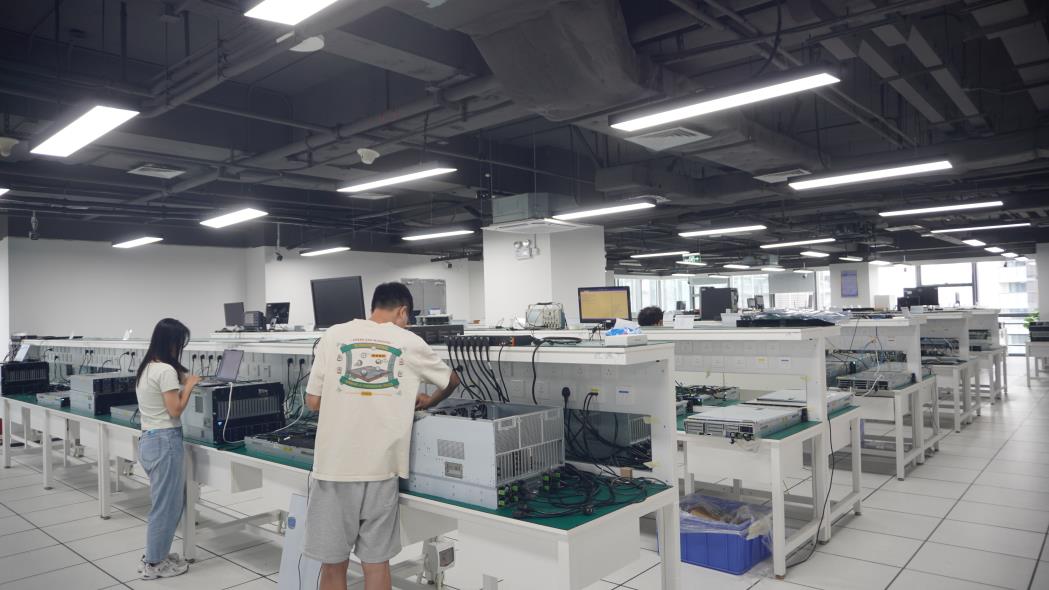
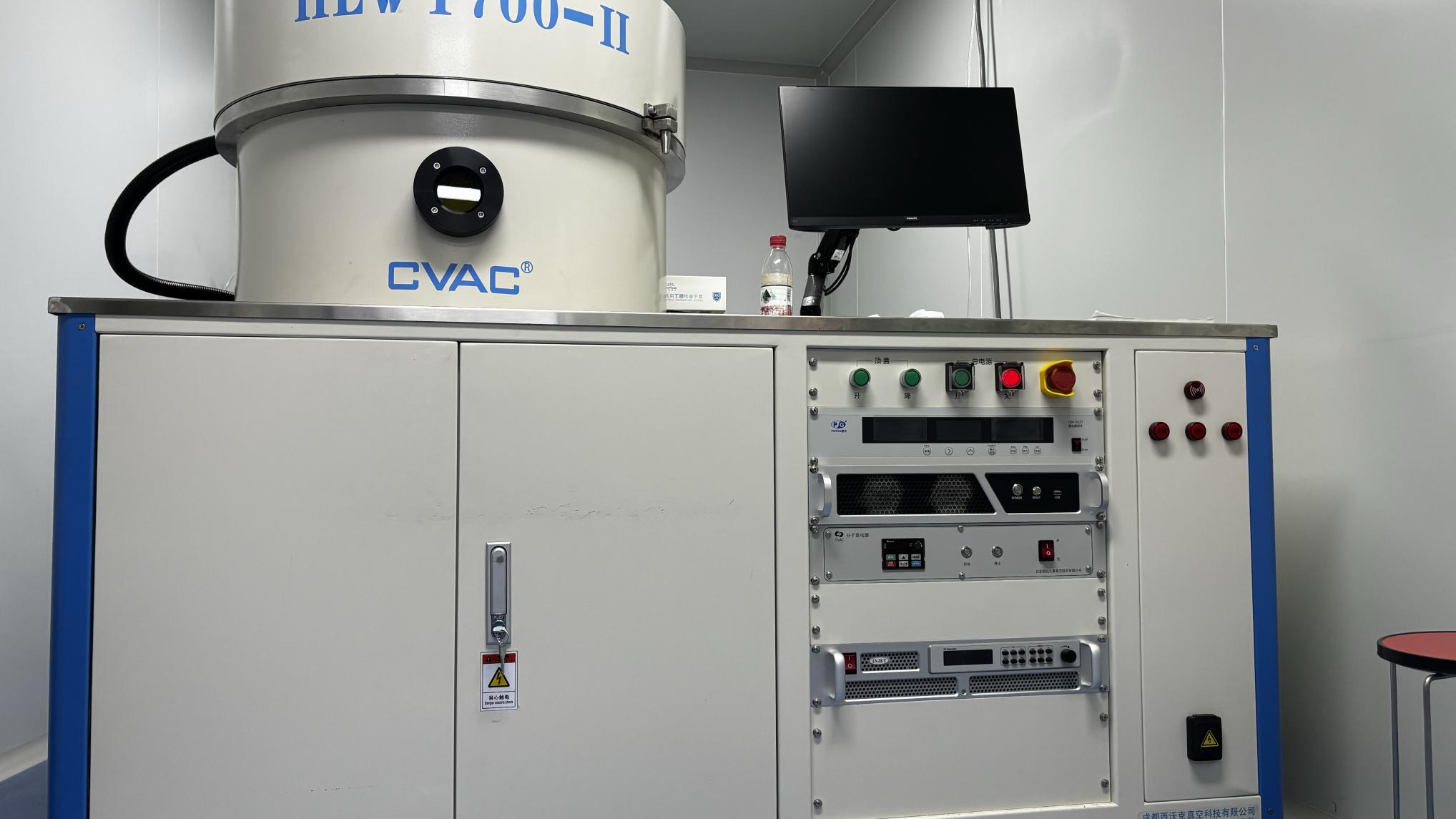
Founded in 2017, Memvora Electronics Technology Co., Ltd. is a professional manufacturer specializing in high-performance DDR5 memory modules, dedicated to delivering reliable memory solutions for consumer, industrial, enterprise, and embedded applications worldwide. With a modern manufacturing facility covering 386㎡, we combine advanced production equipment, strict quality management, and experienced engineering expertise to provide stable, high-speed memory products for global OEM and ODM partners.
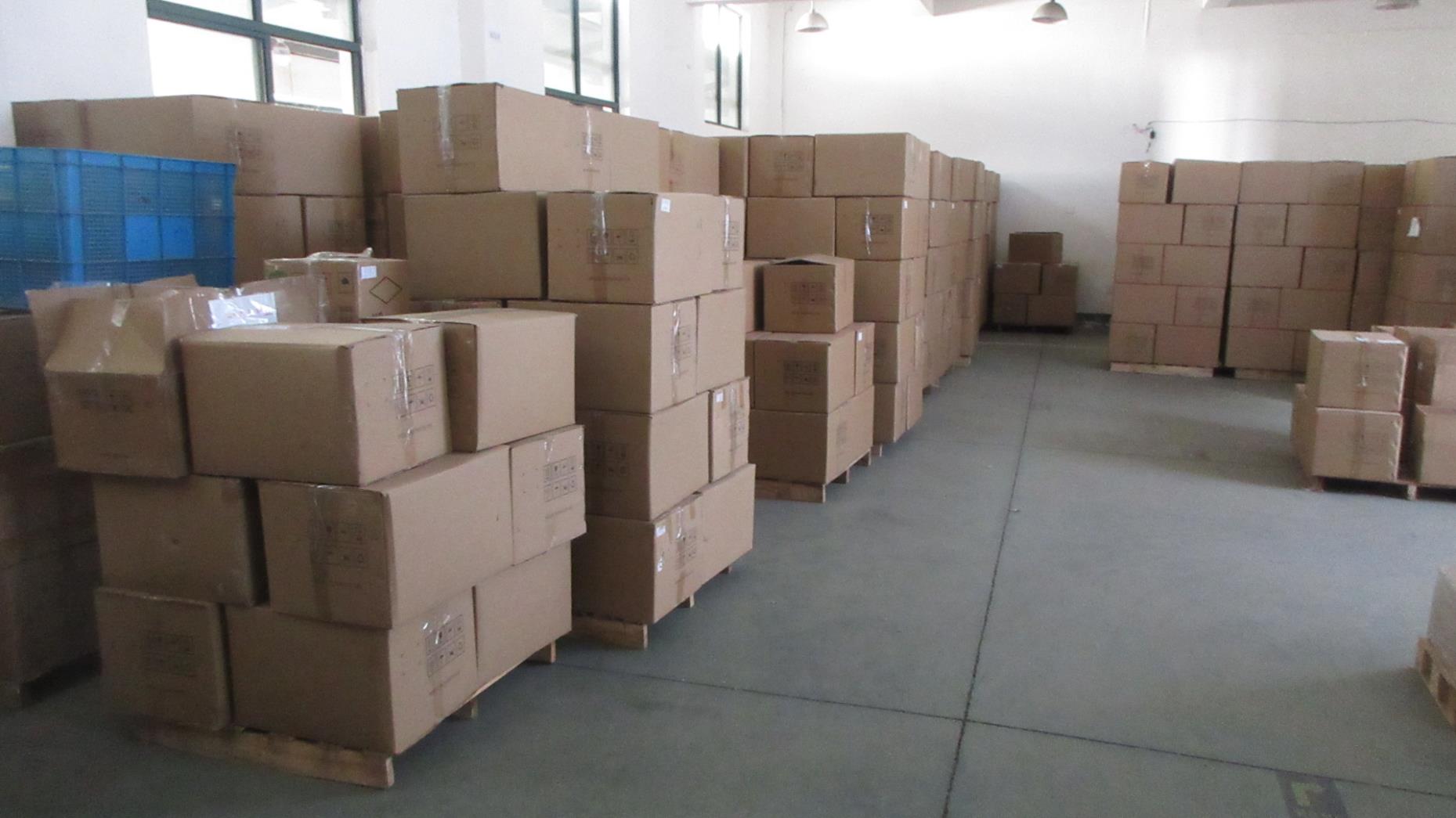
Since entering the international market, Memvora has accumulated 7 years of export experience, serving customers across North America, Europe, Southeast Asia, the Middle East, and South America. Our annual export revenue exceeds US$18.6 million, supported by a strong global supply chain and long-term partnerships with more than 1,280 component suppliers and business partners.
With 14 years of industry experience, our team continuously invests in technology innovation and product development. Our R&D department consists of 126 professional engineers who focus on developing next-generation DDR5 memory solutions with higher speed, lower latency, and enhanced reliability. Last year alone, we successfully launched 86 new memory products to meet the evolving needs of gaming, AI computing, industrial automation, and enterprise servers.
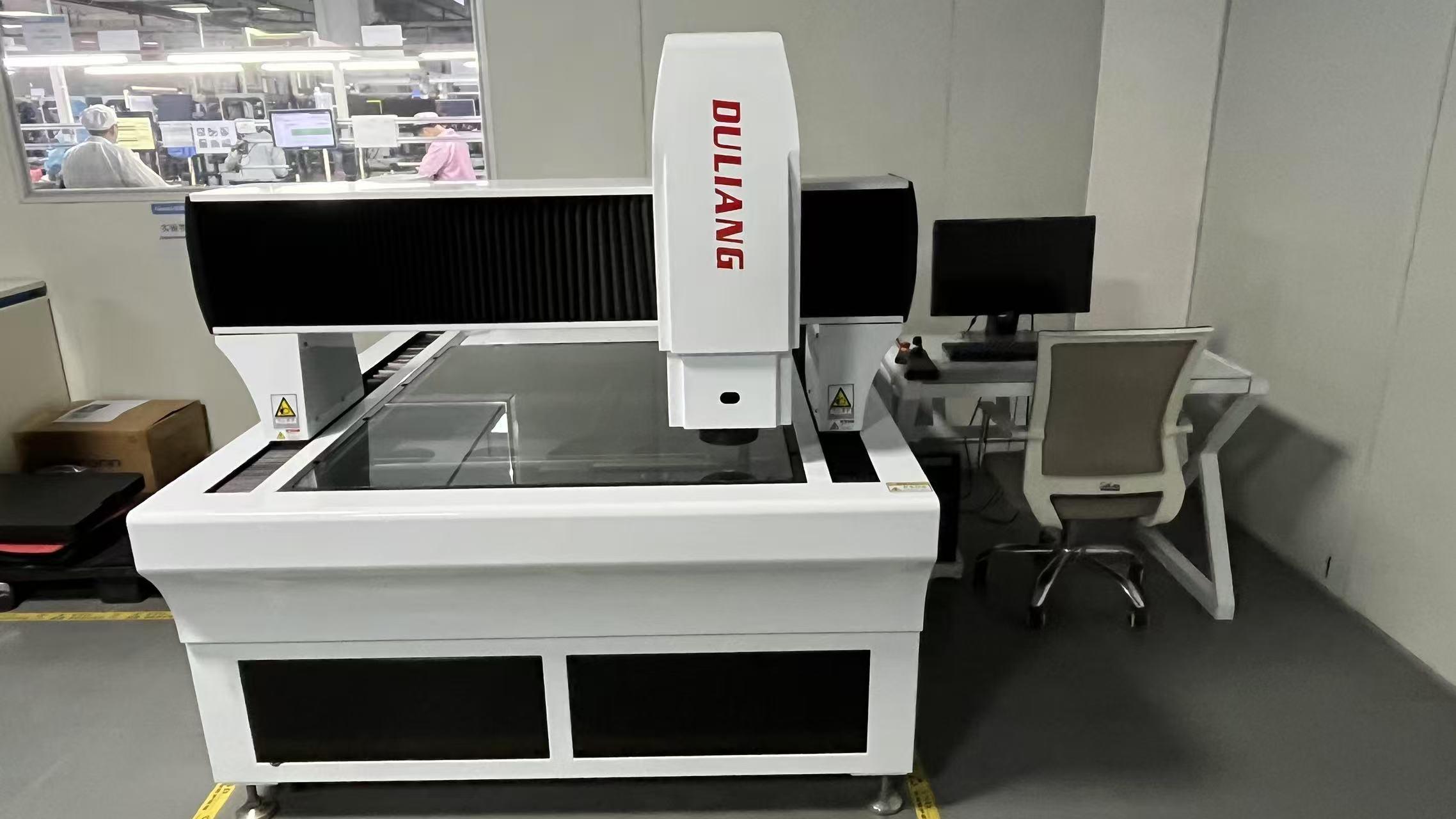
Quality is the foundation of everything we do. Every product undergoes 100% functional testing, burn-in testing, compatibility testing, signal integrity testing, and aging tests before shipment. Our dedicated quality control team of 42 inspectors ensures every memory module meets rigorous international quality standards and delivers long-term stable performance.
Memvora provides flexible OEM, ODM, private label, custom capacity, PCB color, heat spreader design, firmware optimization, and packaging customization services to meet different market requirements. Backed by a responsive engineering team and efficient production management, we help customers shorten development cycles and accelerate product launches.
Today, Memvora serves a diverse customer base including memory brands, computer manufacturers, industrial equipment suppliers, system integrators, distributors, wholesalers, and e-commerce retailers. Through continuous innovation, reliable quality, and customer-focused service, we are committed to becoming a trusted global partner for advanced DDR5 memory manufacturing and customized DRAM solutions.
Rogers substrates (such as RO4003C or RO4350B) are high-frequency materials formulated with hydrocarbon ceramics or PTFE (Teflon). They provide significantly lower signal loss (dissipation factor), much greater thermal conductivity, and a stable dielectric constant across a broad spectrum of temperatures and frequencies compared to standard epoxy-based FR-4 substrates.
A hybrid PCB utilizes Rogers laminates for the critical high-frequency outer layers (where high-speed signals or RF traces run) and lower-cost FR-4 laminates for the internal power and ground planes. This configuration minimizes the total material cost of the stackup while ensuring the high-speed traces maintain perfect signal integrity and low attenuation.
Yes, we regularly ship high-frequency PCBs, memory modules, and thermal components directly to system integrators, aerospace hubs, and hardware startups throughout Seattle, Bellevue, Redmond, and the wider Pacific Northwest region. We provide rapid air freight solutions to keep your R&D and production schedules on track.
For RF and microwave frequencies, Electroless Nickel Immersion Gold (ENIG) or Immersion Silver (ImAg) is preferred. Standard HASL finishes are avoided due to thickness variations and poor solder flatness, which can cause significant impedance disruptions at gigahertz frequencies. ENIG is also highly resistant to environmental factors like Pacific Northwest humidity.
Advanced Industry 4.0 facilities utilize automated laser-direct imaging (LDI), optical lamination alignment, and computerized impedance monitoring. This eliminates manual setup errors, ensures copper etching matches the Gerber design exactly, and guarantees consistency in the dielectric spacing—which is critical to prevent impedance drift in Rogers RF boards.
Prototyping boards can typically be manufactured and shipped within 3 to 5 working days. For larger volume production runs, the lead time is generally 10 to 15 days, depending on material availability and the complexity of the multi-layer stackup design.
Whether you require high-frequency Rogers PCBs for aerospace telemetry, industrial IoT computing units, or high-performance DDR5/DDR4 server memory modules, our engineering team is ready to assist. Contact us to receive a comprehensive quote and technical review.
Send Inquiry Now Memvora