Why Choose High Frequency DDR5 for Global Procurement?

Time:2026-10-02 Author:Isabella
0%

Global procurement teams are rethinking memory choices as workloads become faster, denser, and more distributed. High frequency DDR5 benefits include higher bandwidth, improved power efficiency, and stronger support for data-intensive platforms. These advantages matter in cloud servers, workstations, gaming systems, and industrial computing equipment.

Robert Hallock, former Director of Technical Marketing at AMD, said, “DDR5 is the future of system memory.” This statement reflects a wider industry shift. DDR5 modules can deliver more data per clock cycle than earlier generations. Their dual 32-bit subchannels also improve memory access efficiency. For procurement managers, this can mean smoother application performance and better platform scalability.

But faster is not automatically better.

A practical purchasing decision requires more than frequency ratings. Buyers should compare module compatibility, latency, capacity, thermal behavior, supplier consistency, and long-term availability. A 6400 MT/s module may look attractive on paper. Yet it may perform poorly in a platform that cannot sustain its rated speed. That detail is easy to miss.

Reliable global sourcing also depends on traceability and technical support. Procurement teams need verified specifications, stable production schedules, authentic components, and clear warranty terms. Regional delivery times can affect inventory planning. Exchange-rate changes can affect total cost. These are not glamorous concerns, but they decide project outcomes.

This guide examines why high frequency DDR5 is gaining attention in global procurement. It also considers where its benefits may be overstated. The best choice is not always the fastest module. It is the most suitable, tested, and consistently available solution.
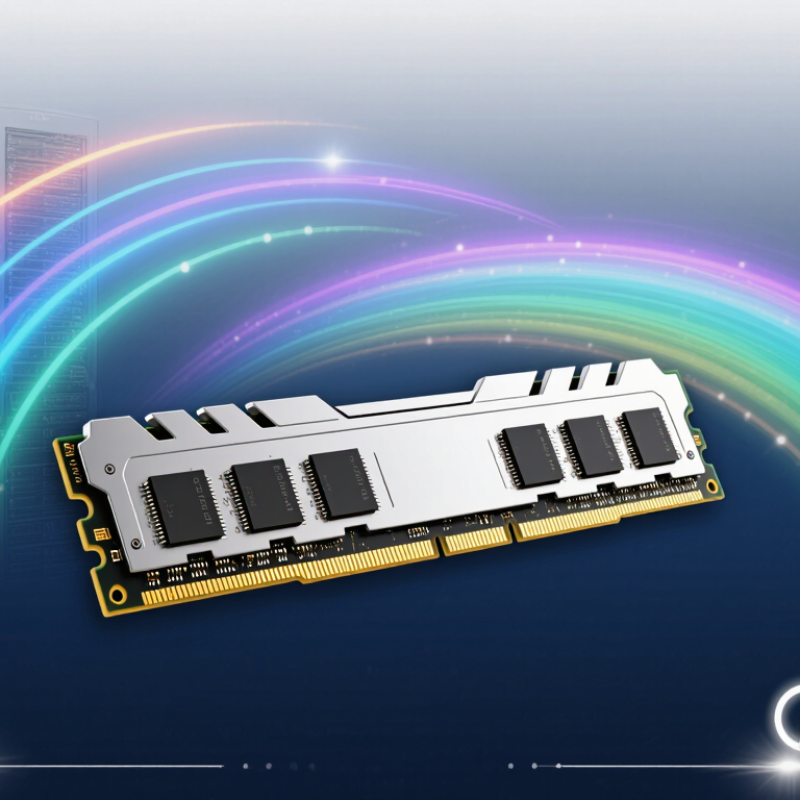
Why Choose High Frequency DDR5 for Global Procurement?

Define High-Frequency DDR5: 4,800–6,400 MT/s Versus DDR4’s 3,200 MT/s

Why Choose High Frequency DDR5 for Global Procurement?

Define High-Frequency DDR5: 4,800–6,400 MT/s Versus DDR4’s 3,200 MT/s

High-frequency DDR5 starts at 4,800 MT/s and commonly reaches 6,400 MT/s. DDR4 typically operates at 3,200 MT/s. MT/s means millions of data transfers per second, not clock speed. At 4,800 MT/s, DDR5 offers 50% more transfer capacity than 3,200 MT/s DDR4. At 6,400 MT/s, the theoretical increase reaches 100%.

This difference matters in servers, workstations, and large data-processing systems. Faster transfers can reduce memory bottlenecks during database queries, virtual machine activity, and technical simulations. Higher density modules may also reduce the number of populated slots. That can simplify system expansion.

The number alone can mislead us. Real performance depends on latency, processor design, channel configuration, and software behavior. A 6,400 MT/s module may perform poorly if the platform supports only lower speeds. Procurement teams should verify motherboard compatibility, voltage requirements, thermal conditions, and validated module lists. They should also test mixed workloads before approving large international orders.

Small details matter.

Shipping conditions can expose weak packaging. Regional power differences can reveal unstable configurations. Firmware settings may need adjustment. DDR5 usually offers stronger bandwidth potential, but it is not automatically the best choice for every system. A careful sourcing process compares measured performance, availability, warranty terms, and long-term platform support rather than trusting speed labels alone.

Why Choose High-Frequency DDR5 for Global Procurement?

Standard DDR5 data rates begin at 4,800 MT/s and extend to 6,400 MT/s, compared with DDR4’s 3,200 MT/s reference rate.

MT/s means mega transfers per second. Compared with DDR4-3200, DDR5-4800 provides 50% higher nominal data-transfer rate, while DDR5-6400 provides 100% higher rate. Actual system performance also depends on memory channels, latency, processor support, and workload.

Measure Bandwidth: DDR5-4800 Reaches 38.4 GB/s per 64-Bit Channel

Why Choose High Frequency DDR5 for Global Procurement?

When comparing memory for global procurement, bandwidth gives a clear starting point. DDR5-4800 delivers 4,800 MT/s. With eight bytes transferred per cycle, one 64-bit channel reaches 38.4 GB/s. That figure is practical, not decorative. It helps engineers estimate data movement for servers, workstations, and embedded platforms. A pair of channels can provide 76.8 GB/s under ideal conditions. Real workloads may achieve less. Software behavior, access patterns, and processor design still matter.

During qualification, I measure sustained throughput with the target application, not only a benchmark. Short tests can look impressive. Long tests reveal heat, throttling, and uneven performance. High-frequency memory may reduce waiting during simulation, database analysis, and large media processing. However, speed alone does not guarantee value. Module density, power limits, error-control features, and motherboard support affect the procurement decision. Our early estimates once treated peak bandwidth as actual output. That was too optimistic. Today, we compare measured results, operating temperature, delivery consistency, and firmware compatibility across regions. Procurement teams should also confirm testing standards and documentation before approving large-volume orders. Small validation costs are easier to manage than a global replacement cycle.

Why Choose High Frequency DDR5 for Global Procurement? - Measure Bandwidth: DDR5-4800 Reaches 38.4 GB/s per 64-Bit Channel

Memory Standard Data Rate
(MT/s)
Nominal Voltage
(V)
Channel Structure Peak Bandwidth per 64-Bit Channel
(GB/s)
Bandwidth vs. DDR4-3200 Procurement Perspective
DDR4-3200 3,200 1.20 Single 64-bit channel 25.6 1.00× Reference point for bandwidth comparison
DDR5-4800 4,800 1.10 Two independent 32-bit subchannels 38.4 1.50× Baseline DDR5 speed with a 50% higher theoretical bandwidth than DDR4-3200
DDR5-5200 5,200 1.10 Two independent 32-bit subchannels 41.6 1.63× Higher throughput for general-purpose systems and virtualized workloads
DDR5-5600 5,600 1.10 Two independent 32-bit subchannels 44.8 1.75× Balanced option for performance, availability, and platform compatibility
DDR5-6000 6,000 Typically 1.10–1.40 Two independent 32-bit subchannels 48.0 1.88× Useful where higher memory throughput is prioritized; verify platform support
DDR5-6400 6,400 Typically 1.10–1.40 Two independent 32-bit subchannels 51.2 2.00× Provides double the theoretical bandwidth of DDR4-3200 when the system supports it

Calculation basis: Peak bandwidth = data rate × 8 bytes per 64-bit channel. Values are theoretical maximums; actual performance depends on the processor, memory controller, channel population, timings, firmware, and workload.

Evaluate Efficiency: DDR5 Operates at 1.1 V Versus DDR4’s 1.2 V

Why Choose High Frequency DDR5 for Global Procurement?

DDR5 operates at 1.1 V, while DDR4 typically uses 1.2 V. This difference appears small. Across large deployments, it matters. Voltage-based dynamic power roughly follows V². Moving from 1.2 V to 1.1 V can reduce this component by nearly 16%, before workload effects. JEDEC’s JESD79-4 and JESD79-5C standards document these nominal voltage levels. The newer standard also supports higher data rates, creating more bandwidth per memory channel.

The efficiency benefit is not automatic. Higher frequencies can increase switching activity, thermal output, and total platform power. Server operators should measure power at idle, mixed workloads, and peak utilization. The Uptime Institute’s global data-center surveys repeatedly identify energy efficiency as a major operational concern. Procurement teams should therefore compare performance per watt, not voltage alone. The arithmetic is clean. Real systems are less predictable.

Tips: Request measured DIMM power data, validated at the intended frequency. Check motherboard compatibility, module capacity, error-correction support, and delivery consistency across regions. Ask suppliers for test conditions and firmware details. A lower voltage claim without workload evidence remains incomplete. Temperature also deserves attention, especially in dense racks. Small assumptions can become expensive at scale.

Assess Reliability: On-Die ECC Supports Higher-Density Memory Designs

Why Choose High Frequency DDR5 for Global Procurement?

High-frequency DDR5 can improve bandwidth for servers, workstations, and data-intensive systems. Reliability becomes more important as memory density increases. On-die ECC helps address this challenge by detecting and correcting certain single-bit errors within each memory device. This support can reduce silent data corruption during continuous operation. However, on-die ECC is not a replacement for system-level ECC. Procurement teams must check the complete platform design.

Tips: Request test reports, error-rate data, and operating-temperature results. Confirm compatibility with the memory controller, motherboard, and firmware. Ask whether the supplier supports traceability across production batches. Small details matter.

In practical qualification work, stable performance depends on more than advertised frequency. Higher speeds may increase thermal sensitivity, signal-integrity demands, and training complexity. A dense module can perform well in a laboratory, then behave differently inside a crowded chassis.

I would not approve a global purchase from density claims alone. One overlooked issue is validation coverage across voltage, temperature, and workload conditions. That gap deserves attention.

Buyers should compare endurance results, inspection procedures, warranty terms, and regional support capability. Reliable DDR5 procurement requires evidence, not optimism.

Standardize Global Sourcing: Compare Speed, Capacity, Compatibility, and Supply Risk

Why Choose High Frequency DDR5 for Global Procurement?

High-frequency DDR5 can improve bandwidth-heavy workloads, but speed alone should not drive purchasing. JEDEC’s JESD79-5C specification begins at 3200 MT/s and supports higher standardized data rates. Common procurement targets include 5600 and 6400 MT/s. Higher bandwidth helps analytics, virtualization, and AI preprocessing. Capacity matters just as much. Large modules can reduce socket pressure and simplify server expansion. However, maximum capacity depends on the processor, motherboard, firmware, and module type. A faster module may downshift when the platform cannot validate its rated speed.

Compatibility creates hidden costs across regions. Registered ECC modules suit many servers, while unbuffered modules fit different systems. They are not interchangeable. The 2024 TechInsights memory market analysis indicated that DDR5 adoption continued accelerating in server shipments, reflecting broader platform migration. Yet qualification remains uneven between markets and manufacturers. Supply risk also deserves a measured view. Industry forecasts from Omdia’s 2024 memory outlook point to stronger demand from data-center infrastructure, which can tighten popular high-speed bins. My concern is simple: a specification sheet rarely shows allocation risk, lead-time volatility, or regional certification delays.

Tips: Build a cross-region approved list. Record speed, capacity, rank, ECC type, voltage, and firmware status. Request two qualified sources where possible. Keep a lower-speed fallback. It may protect schedules better than chasing peak frequency. Test mixed lots carefully; consistency is often assumed, not proven.

FAQS

What does high-frequency DDR5 mean?

High-frequency DDR5 commonly runs from 4,800 to 6,400 MT/s. MT/s means millions of transfers per second. It is not clock speed. Numbers can mislead.

How does DDR5-4800 compare with DDR4-3200?

DDR5-4800 provides 50% more theoretical transfer capacity than DDR4-3200. At 6,400 MT/s, the theoretical increase reaches 100%. Actual results depend on the platform and workload.

What bandwidth does one DDR5-4800 channel provide?

One 64-bit channel can reach 38.4 GB/s under ideal conditions. Two channels may provide 76.8 GB/s. Real applications usually achieve less. Software access patterns matter.

Which workloads may benefit from faster DDR5?

Faster memory can reduce waiting during database analysis and virtual machine activity. It may also help technical simulations and large media processing. Benefits vary between applications. Test the real workload.

Does higher memory speed always improve system performance?

No. Processor design, latency, channel configuration, and software behavior remain important. A 6,400 MT/s module may run slower on an unsupported platform. Peak bandwidth is not actual output. Our earlier estimates were too optimistic.

Is DDR5 more energy-efficient than DDR4?

DDR5 typically operates at 1.1 V, compared with 1.2 V for DDR4. The voltage-related dynamic power component may drop by nearly 16%. Higher frequency can increase heat and switching activity. Measure performance per watt.

What should buyers check before ordering DDR5 internationally?

Confirm motherboard support, module capacity, voltage, and error-control features. Check validated module lists and required firmware settings. Review regional delivery consistency and warranty terms. Small details matter.

How should high-frequency DDR5 be tested before large procurement?

Use the intended application, not only a short benchmark. Measure sustained throughput, idle power, workload power, temperature, and throttling. Test mixed workloads for longer periods. Test longer. Shipping packaging also deserves inspection.

Conclusion

High frequency DDR5 benefits global procurement by combining faster data transfer, greater bandwidth, improved power efficiency, and stronger support for high-density memory designs. Operating between 4,800 and 6,400 MT/s, DDR5 significantly exceeds DDR4’s typical 3,200 MT/s rate. At DDR5-4800, each 64-bit channel can deliver up to 38.4 GB/s of bandwidth, helping systems handle demanding workloads more efficiently. Its lower 1.1 V operating voltage also reduces energy consumption compared with DDR4’s 1.2 V requirement.

For international sourcing, DDR5 should be evaluated beyond speed alone. On-die ECC can improve data integrity and support more reliable, higher-capacity configurations, while compatibility with processors, platforms, and existing infrastructure remains essential. Procurement teams should compare performance, capacity options, power requirements, validation needs, and supply stability across regions. A standardized evaluation process helps organizations balance technical advantages with availability, integration risk, and long-term purchasing requirements.

Isabella

Isabella

Isabella is a dedicated marketing professional with a sharp focus on driving brand growth and engagement through strategic content creation. With an extensive background in digital marketing, she combines her passion for storytelling with her keen understanding of industry trends to deliver......